
5 Things I Recommend Every Allergy Patient Do Before Reaching for Antihistamines
Updated: Mar 24
Amidst all the blossoming and blooming that make spring so intoxicating, for many of us there is another less welcome arrival — the itchy eyes, the sneezing fits, the scratchy throat, the river of mucus that seems to have no end. Seasonal allergies affect hundreds of millions of people worldwide, and the numbers are rising every year.
The good news is that there is a great deal we can do — naturally, effectively, and with solid research behind us. Here is what I know, updated with the best current evidence.
First, Let's Understand What's Actually Happening
All those annoying symptoms — the sneezing, the itching, the congestion — are the result of your immune system mounting an inflammatory response to something it has decided is a threat (pollen, dust, mold) when it doesn't actually need to. This triggers your mast cells — specialized white blood cells — to release histamine, and histamine is responsible for most of what you are feeling.
The key insight is this: your immune system's reactivity is not fixed. It is profoundly influenced by what you eat, the state of your gut, your stress levels, your sleep, and the overall inflammatory burden your body is carrying. Which means there is a great deal of leverage available to you — if you know where to apply it.
Start With Your Diet
If you are suffering from seasonal allergies, the first place to look is always the dinner plate. An immune system that is already inflamed from poor diet, food sensitivities, or gut dysbiosis will be a far more reactive immune system — meaning your allergy symptoms will be more intense, more persistent, and harder to treat.
The anti-inflammatory diet is the foundation. The essentials: whole foods, abundant vegetables, healthy fats, quality protein. Remove the obvious inflammatory drivers — sugar, ultra-processed foods, highly processed dairy, and gluten if you are sensitive to it. These foods promote systemic inflammation that directly amplifies the histamine response.
A newer area of significant research is the gut-nose axis — the direct relationship between your gut microbiome and nasal inflammation. A 2025 study published in Frontiers in Microbiology found that people with allergic rhinitis carry a distinct gut microbial fingerprint characterized by dysbiosis and altered metabolite production that appears to amplify nasal inflammation. People with allergic rhinitis also consistently show reduced gut microbial diversity compared to those without allergies. What this means practically: supporting your gut microbiome through fermented foods, diverse plant fibers, and targeted probiotics is now a legitimate and evidence-supported strategy for managing seasonal allergies — not just a general wellness recommendation.
The Supplements That Work
Quercetin — nature's antihistamine, now with stronger evidence than ever
Quercetin is a flavonoid found naturally in onions, apples, capers, and berries, and it has become one of the most thoroughly researched natural compounds for allergic disease. A comprehensive 2025 systematic review and meta-analysis confirmed what I have been observing clinically for years: quercetin inhibits mast cell degranulation, reduces the production of histamine and pro-inflammatory cytokines, and restores homeostasis of the immune system by modulating the Th1/Th2 and Treg/Th17 balances. In plain language — it calms down the immune overreaction at multiple levels simultaneously, something most conventional antihistamines cannot do.
Human studies showed superior symptom improvement when quercetin-containing supplements were added to standard therapy compared to conventional treatment alone.
One important update: bioavailability matters enormously with quercetin. Standard quercetin capsules have notoriously poor absorption. Look for quercetin phytosome (a lecithin-bound form) or quercetin with bromelain, both of which significantly improve absorption. Current dosing for allergy support ranges from 500 to 1,000 mg per day in divided doses, ideally begun two to three weeks before allergy season rather than waiting for symptoms to arrive.
My recommendation: Quercetin phytosome 500mg, twice daily, taken 30 minutes before food.
NAC — the phlegm buster
N-Acetyl-Cysteine remains one of my most reliable clinical tools for anyone dealing with mucus, post-nasal drip, or congestion. NAC works by breaking the disulfide bonds in mucus, thinning it and making it easier to clear. It also replenishes glutathione — your body's master antioxidant — which directly reduces the oxidative stress component of allergic inflammation. Take 600mg twice daily when symptoms are active.
Vitamin C — underrated and essential
Buffered Vitamin C is a mast cell stabilizer — it directly reduces histamine release and supports the integrity of the mucosal barriers that keep allergens out in the first place. Begin with 2,000–3,000 mg daily and increase by 1,000 mg daily until you reach bowel tolerance (loose stools), then back off by 1,000 mg. That slightly uncomfortable threshold is your body's optimal dose. Vitamin C is also water-soluble and rapidly depleted under stress — including the physiological stress of an active allergic response — so consistent dosing throughout allergy season matters.
Stinging Nettles — a traditional remedy now validated by molecular science
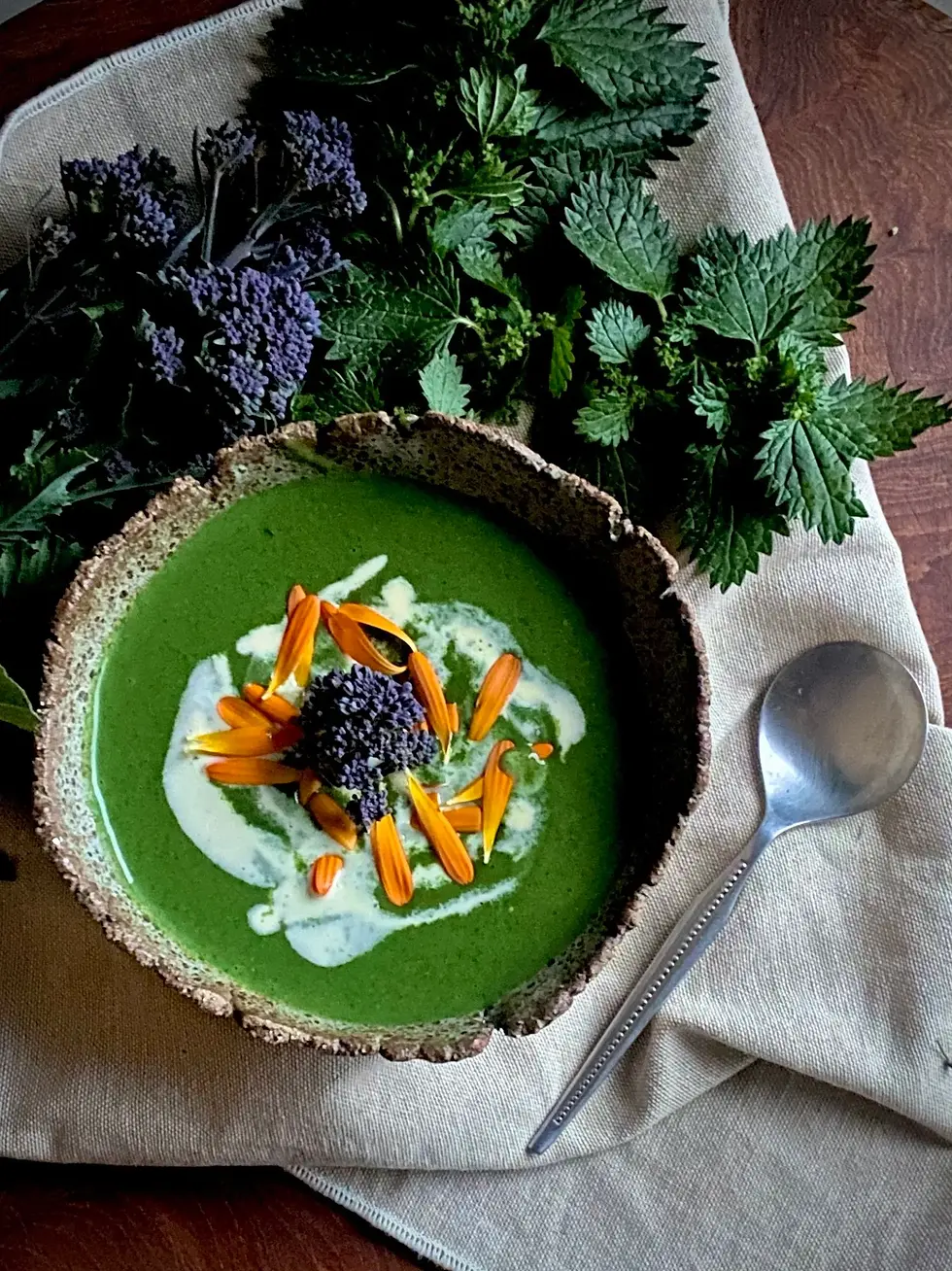
Nettles (Urtica dioica) have been used for centuries for seasonal allergies and the science is increasingly catching up with traditional wisdom. Stinging nettle has been shown to act as a histamine antagonist and may help inhibit mast cell tryptase, both of which are mechanisms associated with managing allergic responses. A 2024 computational study testing 277 compounds found in stinging nettle identified multiple mechanisms by which it targets key receptors involved in allergic rhinitis — including histamine and bradykinin receptors simultaneously. This multi-receptor action is actually an advantage over many conventional drugs, which typically target only one pathway.
Look for freeze-dried nettle leaf capsules, 300–600mg, taken two to three times daily during allergy season. This is one of the safest and most accessible herbal options available.
Probiotics — feeding the gut-nose axis
Given the emerging research on gut dysbiosis and allergic rhinitis, a targeted probiotic has a legitimate place in your allergy protocol. Look for multi-strain formulas containing Lactobacillus and Bifidobacterium species, 30–50 billion CFU, taken daily throughout allergy season. The effects are not immediate — give it four to six weeks to begin shifting the immune landscape. Fermented foods alongside supplementation — kefir, kimchi, sauerkraut, miso — add diversity that capsules alone cannot replicate.
The Chinese Medicine Arsenal
Chaihu Guizhi Tang remains one of my favorite classical formulas for the allergic constitution — it addresses the underlying pattern of Wei Qi deficiency and wind invasion that in Chinese medicine underlies most seasonal allergy presentations. Take as a tea: 9 grams (3 scoops) of powder in hot water, twice daily for prevention, three to four times daily for acute symptoms. Slightly sweet, cinnamon-y, and gently bitter — most people find it surprisingly pleasant.
Wind Pearls is my go-to formula in capsule form for the classic hay fever picture — sneezing, watery itchy eyes, stuffy nose, and also for red itchy skin and wheezing. It disperses wind, transforms phlegm, and opens the nose and chest. One of the most clinically reliable formulas I use this time of year.
Acupuncture — Now With Stronger Evidence Than Ever
I recommend weekly acupuncture throughout the spring allergy season, and the research has never been stronger in support of this recommendation. A 2025 review published in the International Journal of General Medicine summarized the current evidence and confirmed that acupuncture is significant in improving allergy symptoms (American Thyroid Association) through multiple mechanisms including immune regulation, neural modulation, inflammation modulation, and — notably — microbiota modulation. Acupuncture is now understood to work on the gut-immune axis as well as locally in the nasal passages.
Compared with traditional medical treatment, acupuncture treatment of allergic rhinitis has fewer side effects and drug dependence, especially for those patients who do not respond well to medical treatment, acupuncture treatment has become a new hope. (PubMed Central). The American Academy of Otolaryngology includes acupuncture as an option in its clinical practice guidelines for allergic rhinitis. Four to six weekly sessions through the peak of your allergy season is a reasonable starting protocol.
Simple Daily Practices That Make a Real Difference
These are small, consistent habits that — done together — meaningfully reduce your allergen exposure and support your body's resilience:
Wash your face and hands when you come inside. Pollen lands on skin, eyebrows, and hair and continues to provoke a reaction until it is removed. This single habit can reduce symptom burden significantly.
Shower before bed. Do not carry a day's worth of pollen into your pillow and sleep with it for eight hours. A quick evening shower removes what your body has accumulated all day and noticeably reduces nighttime and morning symptoms.
Nasal saline rinse daily. The evidence for saline nasal irrigation for seasonal allergies is solid and consistent. A neti pot or saline spray used once or twice daily mechanically clears allergens from the nasal passages before they can trigger a response. Use distilled or previously boiled water — not tap water directly.
Drink 8–10 glasses of water daily with a pinch of good quality salt. Adequate hydration keeps mucous membranes moist and resilient, supports lymphatic drainage, and helps thin secretions naturally.
Keep windows closed on high pollen days and check local pollen counts. Pollen counts are highest in the morning — if you love fresh air, open windows in the late afternoon or evening when counts drop.
Address Your Stress Response
This one does not appear in most allergy articles, but it belongs here. Psychological stress directly amplifies allergic reactivity — cortisol dysregulation promotes the Th2 immune shift that underlies allergy, and stress itself causes mast cell degranulation. If your allergy symptoms are significantly worse during stressful periods, this is not in your imagination — it is immunology.
Practices that regulate the stress response — Qi Gong, breathwork, consistent sleep, time in nature — are not peripheral to allergy management. They are part of it. And spring, as we have been discussing, is precisely the season when the nervous system needs the most support.
My Spring Allergy Protocol at a Glance:
Begin two to three weeks before allergy season for best results
Quercetin phytosome 500mg 2x/day before food
NAC 600mg 2x/day
Buffered Vitamin C to bowel tolerance (start at 2,000–3,000mg)
Freeze-dried nettles 300–600mg 2–3x/day
Probiotic multi-strain 30–50 billion CFU daily
Chaihu Guizhi Tang or Wind Pearls as indicated
Acupuncture weekly through peak season
Daily saline nasal rinse
Evening shower before bed
Anti-inflammatory whole foods diet; remove sugar, gluten if sensitive
Fermented foods daily
Allergies do not have to define your spring. With the right support — dietary, botanical, structural, and energetic — your immune system can learn to meet the season with equanimity rather than alarm.
Come see me if you want help tailoring this to your specific picture. Every allergic person is different, and the most effective protocol is always the individualized one.
We are in this together.
Dr. Kelly Jennings The Source for Healing drjennings@thesourceforhealing.com
Comments